Tribute to Bob Harding

Bob Harding (1935 - 2023)
In Memory of Robert Elton Harding
It would be too easy to describe Bob Harding as being the heart and soul of the Dartmouth Historical & Arts Society, and to say we should honor him at this meeting simply to recognize the great contributions of time and energy he devoted to this organization over the past decade. He deserves more than our simple thanks today, and I’m sure that the DHAS will find some appropriate way to permanently express its appreciation of his work on behalf of this Society over the years.
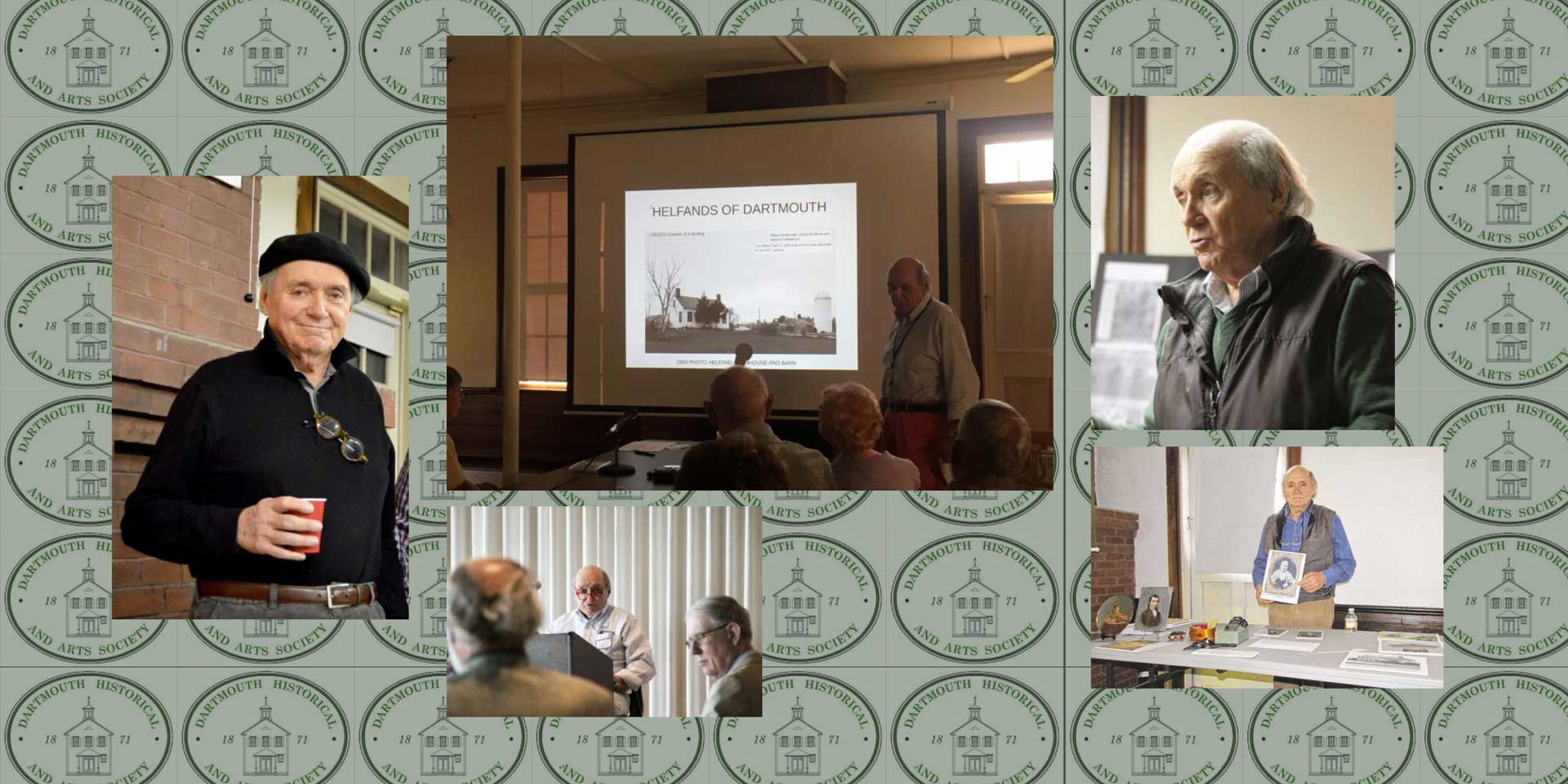
Of course, Bob Harding WAS indeed the heart and soul of the DHAS for so many reasons. We could spend hours reciting all the special projects, educational initiatives, and lessons on local history and folklore that he dreamed up, shepherded to reality, and shared with a growing audience of history lovers during his time as president here. Way back, he apparently had this vision of building here a little community of history-loving people from Old Dartmouth, and giving those special people a second home in the preserved and revitalized former Russells Mills Schoolhouse where we have gathered today. Here, in this former library and schoolhouse, giving lectures, securing speakers on various topics, and leading DHAS outreach efforts, Bob once again became a teacher, a leader, and the organizer of a team of like-minded folks in DHAS and collaborating partner groups who are dedicated to the important task of educating us all about our shared history. There is no better place to focus on our very interesting common history than this little corner of southeastern Massachusetts, and there was no better person for leading the latest educational efforts in that topic area than Robert Elton Harding.
Born in New Bedford in 1935, Bob spent much of his childhood off Old Westport Road in Dartmouth, not far from the homestead farm of colonial farmer and Revolutionary War veteran Joseph Weaver. He personally launched a campaign to have UMass Dartmouth preserve Weaver’s home as a local history landmark. Perhaps his early interest in local history came about as he was himself a descendant of a great many early residents of Old Dartmouth’s five towns, and the larger Massachusetts Bay Colony, dating back to colonial times. As a skilled genealogist, he was able to trace the numerous branches of his family tree back through the centuries in places like Dartmouth, New Bedford, Acushnet and other local towns. He loved asking folks about their family histories, and talking about where those families came from, especially if they were from Old Dartmouth.
Bob was especially proud of his Dartmouth roots. He showed his leadership abilities early in life, serving as president of his Dartmouth High School class for all four years there, a fact he was very proud of. He went on to study Economics and History at Northeastern University, and earned his PhD at Carnegie Mellon University in 1968. He retired from his executive position at the Foxboro Company in 1985, then became the CFO of another corporation until his second retirement in 1998. During his professional career, he also served as an adjunct professor of business and history at universities including Bryant University, WPI and UMass Dartmouth. I mention his resume just to inform you that Bob was always a busy man, and a man who accepted big challenges. A great example was his leadership in the acquisition and re-development of the abandoned John Slater historic mill in Rhode Island into a residential housing site. Here, in Dartmouth, he has been instrumental in preserving, repairing, and revitalizing this schoolhouse, which the Town of Dartmouth once considering disposing of as surplus property. His reward was having to meet with town officials on a regular basis to renew or revise the short leases the town grants to DHAS in exchange for maintaining, repairing, and restoring the building and grounds.
Anyone who knew Bob well will find the mentions of “retirements” amusing. It is hard to imagine Bob not juggling six different balls in the air at any one time. His obituary said: “Throughout his life, he enjoyed golfing, reading, canoeing, and being the family historian. In addition to genealogy he dedicated time to researching and preserving local history through books, events, and recorded interviews.” Perhaps his single greatest accomplishment in this area was spearheading the transcription and the publication of volumes of the Dartmouth Quaker meeting minutes, starting from 1699... He was a major figure in helping to transcribe and edit the records, recruiting volunteers to help with the huge project, finding project partners and a publisher, securing donors to finance the work, and leading the outreach effort to publicize the first volume and get it into the hands of Friends organizations, area public officials, and into relevant libraries. We have to thank all of the volunteers involved in helping to get this important research project started for their hard work and time commitments– and to especially thank Bob, their leader. The book will join the growing DHAS database of historical records available online to historical researchers, genealogists, educators, and the interested public all over the world. I think it will also stand as a timeless tribute to his work leading the DHAS.

October 22, 2023
Written by Robert Barboza
and read by him at the DHAS Annual Meeting